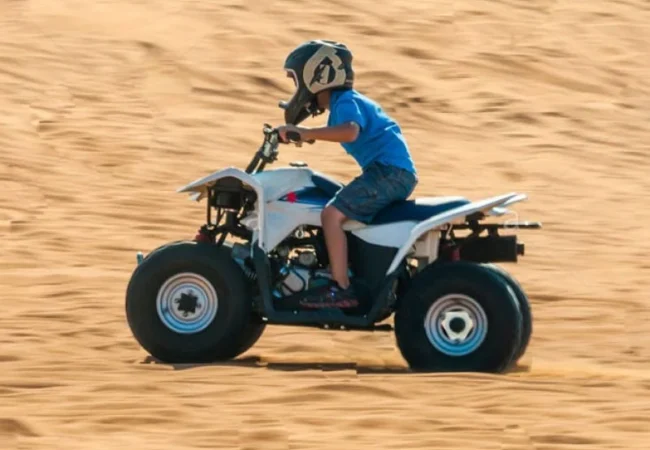
 AED 150
Yamaha 90cc
- Ages 9-12
- Track
- Supervised
A dedicated loop right by the main site, so a child rides while the rest of the family sets off on the bigger route.
Book this ATV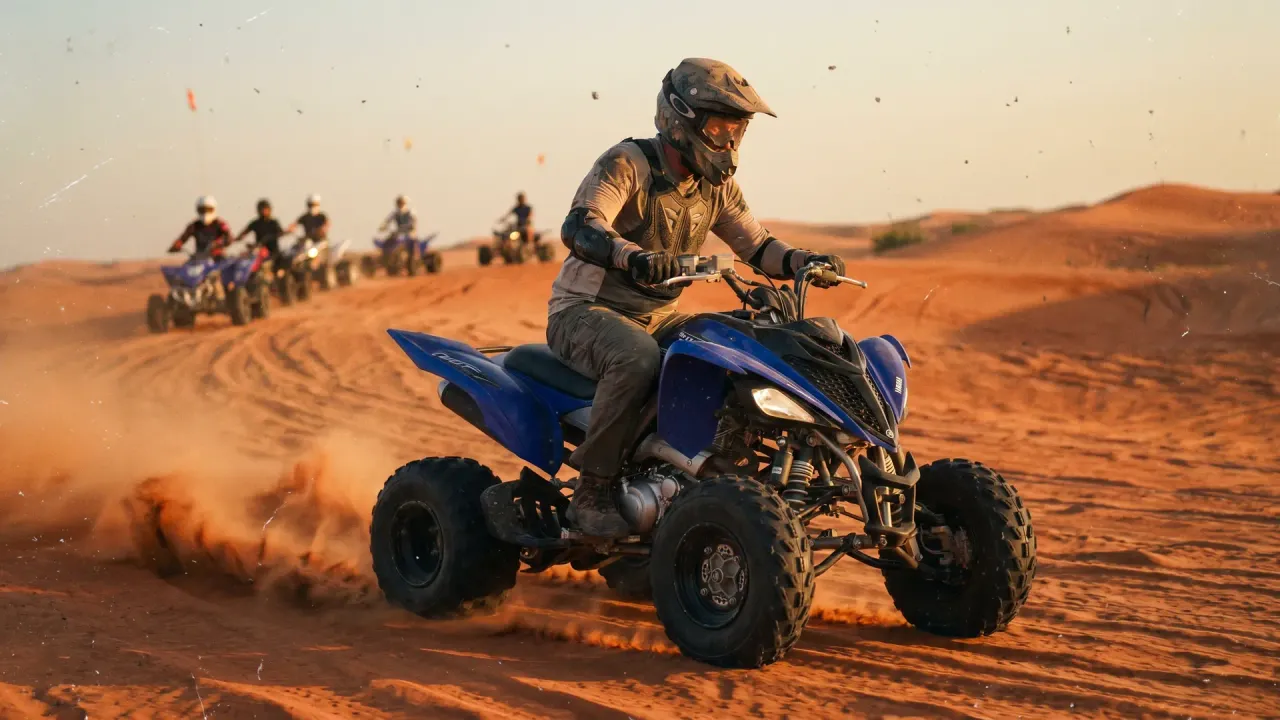
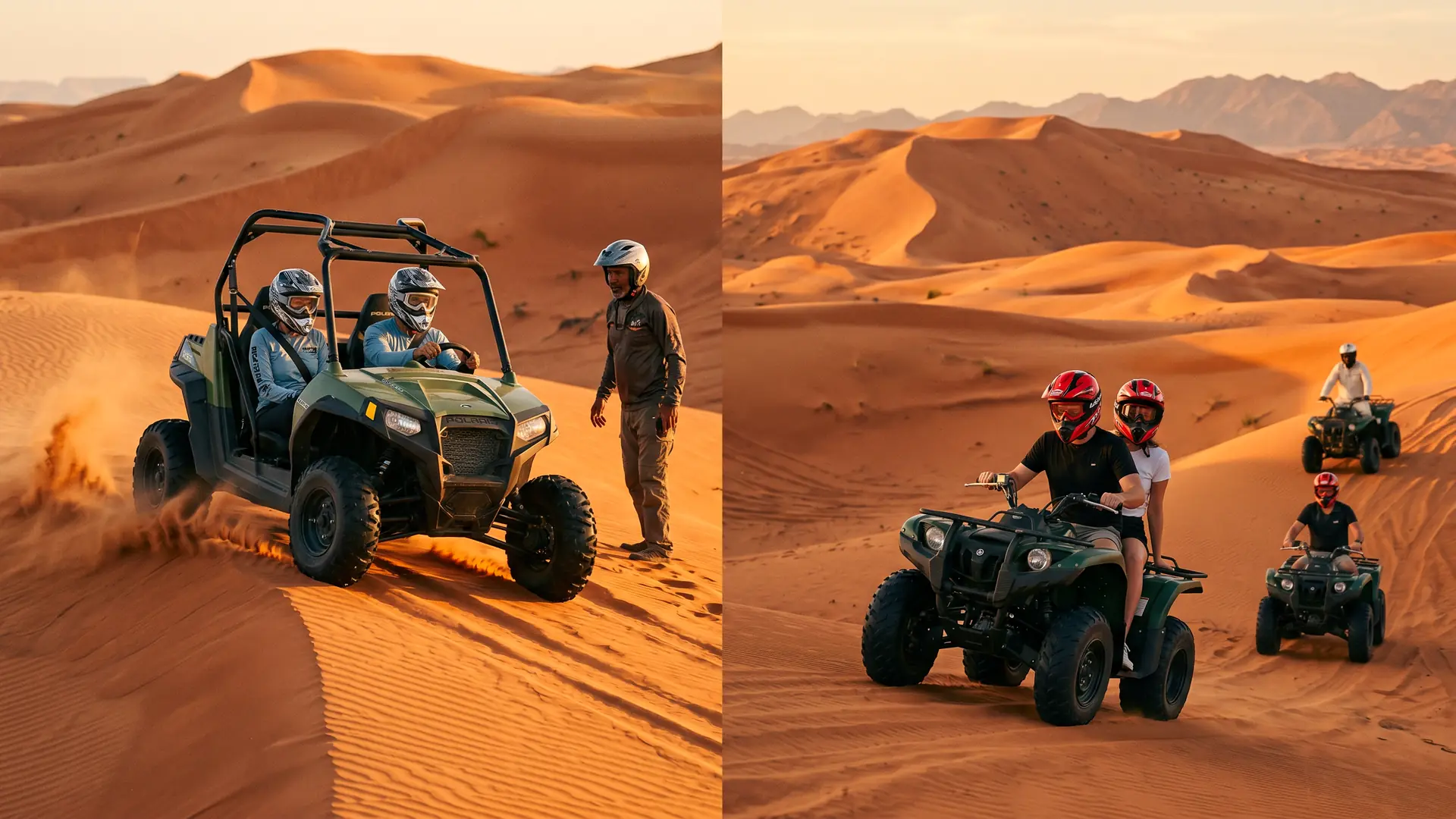
Every booking starts the same way regardless of background: gear fitted, a full briefing, then a flat-sand warm-up before a guide decides which line through the Al Lahbab dunes actually suits you. This is not a coin-operated loop with the throttle capped for safety's sake — it is real terrain, matched to a real beginner, on any of eight machines, spanning a supervised option for children through to the fastest Raptor on the fleet.
No driving licence and no riding history are needed to book an ATV at Al Lahbab, about 45 minutes past Downtown Dubai. Every rider gets a Yamaha of their own, and a guide sets the pace at the front rather than leaving anyone to work it out alone. The entry point for a first-timer is the 220cc at AED 200; most riders move up to the 400cc at AED 250 once they are comfortable, with the Raptor 700cc at AED 795 for anyone cleared to handle it. Children from nine to twelve get their own supervised 90cc lane at AED 150.
For a group with mixed confidence, the Evening Desert Safari with ATV and BBQ at AED 375 gets booked more than any other combination on this site — a shorter, beginner-paced ATV session, dune bashing for anyone who would rather not ride, and dinner at the camp to bring everyone back together. Secure online advance payment confirms your booking, support available 24/7.
Every price below is per rider — except the 400cc double, built to carry two people on one shared ticket. None of it gets charged to your card until pickup, machine and timing are all locked in.
| Machine | Suits | From |
|---|---|---|
| Yamaha 90cc | Ages nine to twelve on their own supervised loop, guardian nearby the whole time. | AED 150 |
| Yamaha 220cc | The one guides actually recommend for a genuine first attempt — soft, forgiving, hard to get wrong. | AED 200 |
| Yamaha 400cc | What most bookings end up on once the warm-up shows a rider is ready for it. | AED 250 |
| Yamaha 400cc double | One machine, two riders, one fee — built for a pair who would rather share. | AED 350 |
| Yamaha 400cc turbo | Same familiar frame with noticeably more pull, usually booked by returning riders. | AED 350 |
| Yamaha Grizzly 450cc | A heavier, steadier build for anyone tackling one of the longer routes. | AED 450 |
| Sports quad 625cc | Sharper handling that rewards real hours in the saddle, not a first outing. | AED 700 |
| Yamaha Raptor 700cc | The fastest machine on the fleet, handed over only after a guide has seen you ride. | AED 795 |
Confidence matters more than the number on the machine. Say honestly where you stand and the guide steers you toward the right one, then builds the route around it.
AED 150A dedicated loop right by the main site, so a child rides while the rest of the family sets off on the bigger route.
Book this ATV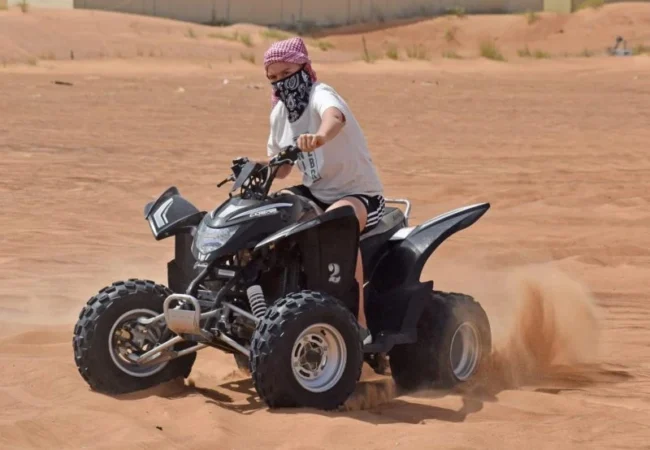 AED 200
Genuinely built for someone who has never gripped a throttle before. Most first-timers wish they had booked more time on it, not a bigger machine.
Book this ATV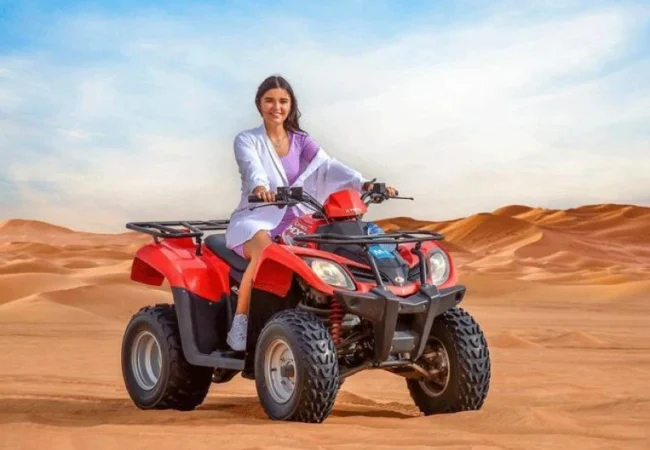 AED 250
The machine most sessions run on once the warm-up confirms a rider is ready. Enough response to feel real without asking much of you.
Book this ATV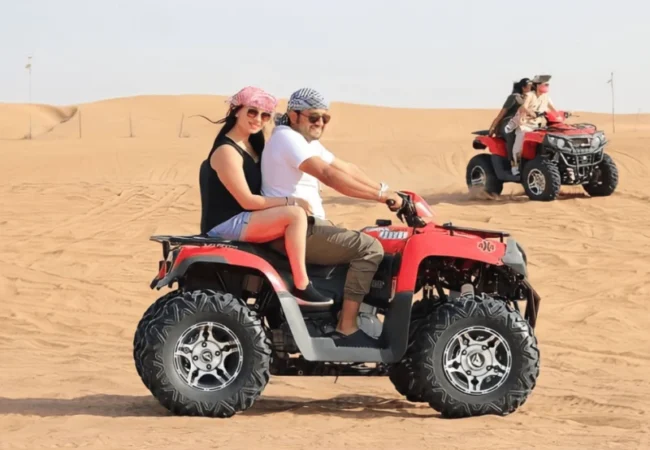 AED 350
Built for exactly one situation: one of you wants to be behind the controls, the other is happier just holding on and enjoying the view.
Book this ATV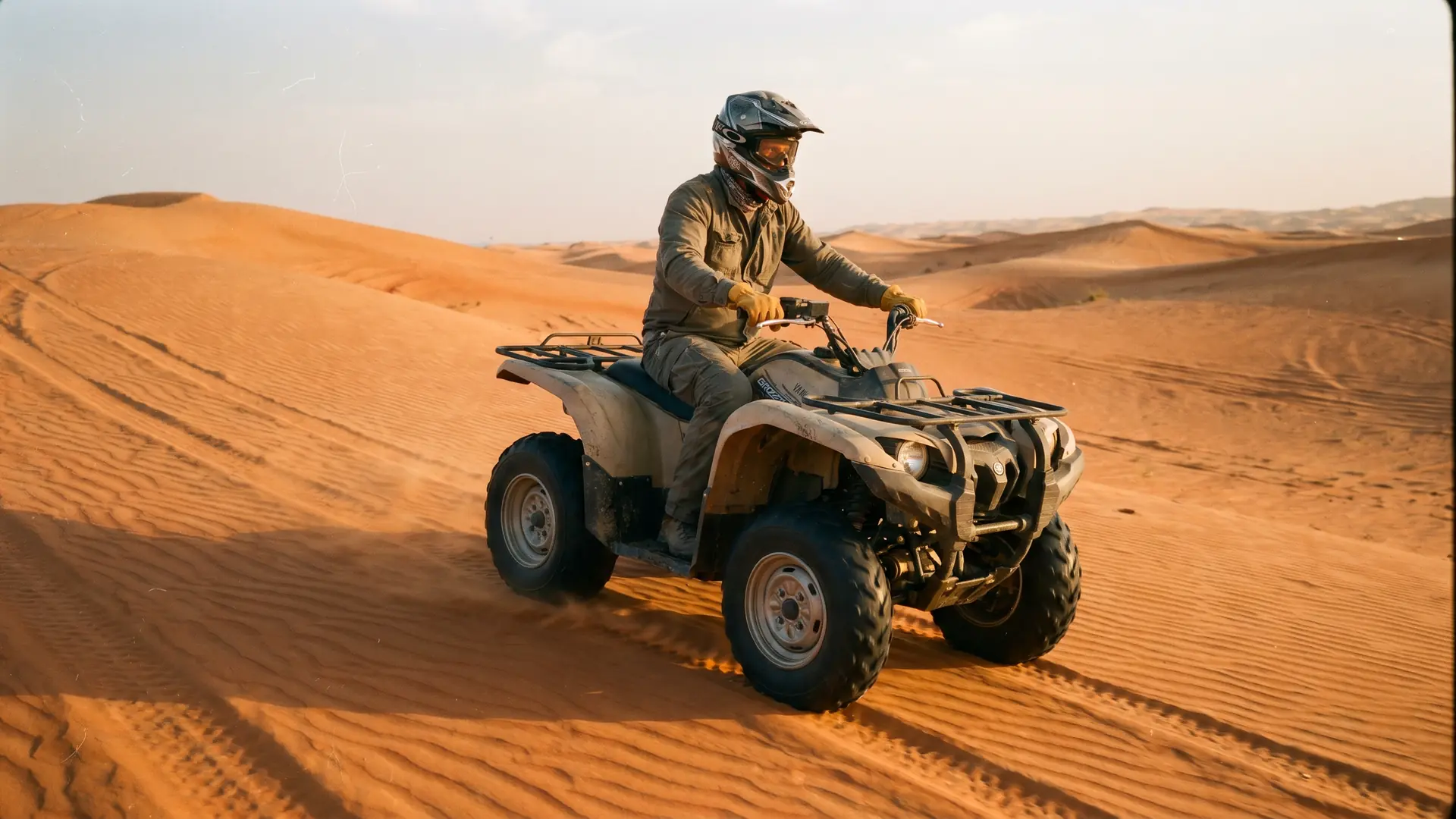 AED 350
Same familiar handling as the standard 400cc, with a noticeably harder pull out of a bowl. Mostly booked by riders on a repeat visit.
Book this ATV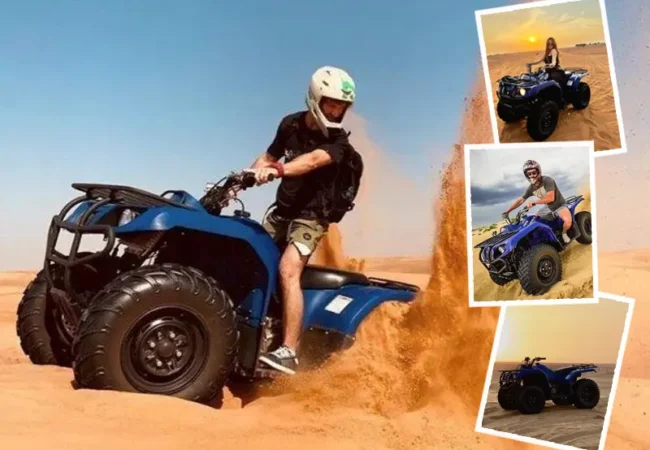 AED 450
A steadier, heavier frame that holds its line better over broken ground. Worth asking for on any of the longer routes.
Book this ATV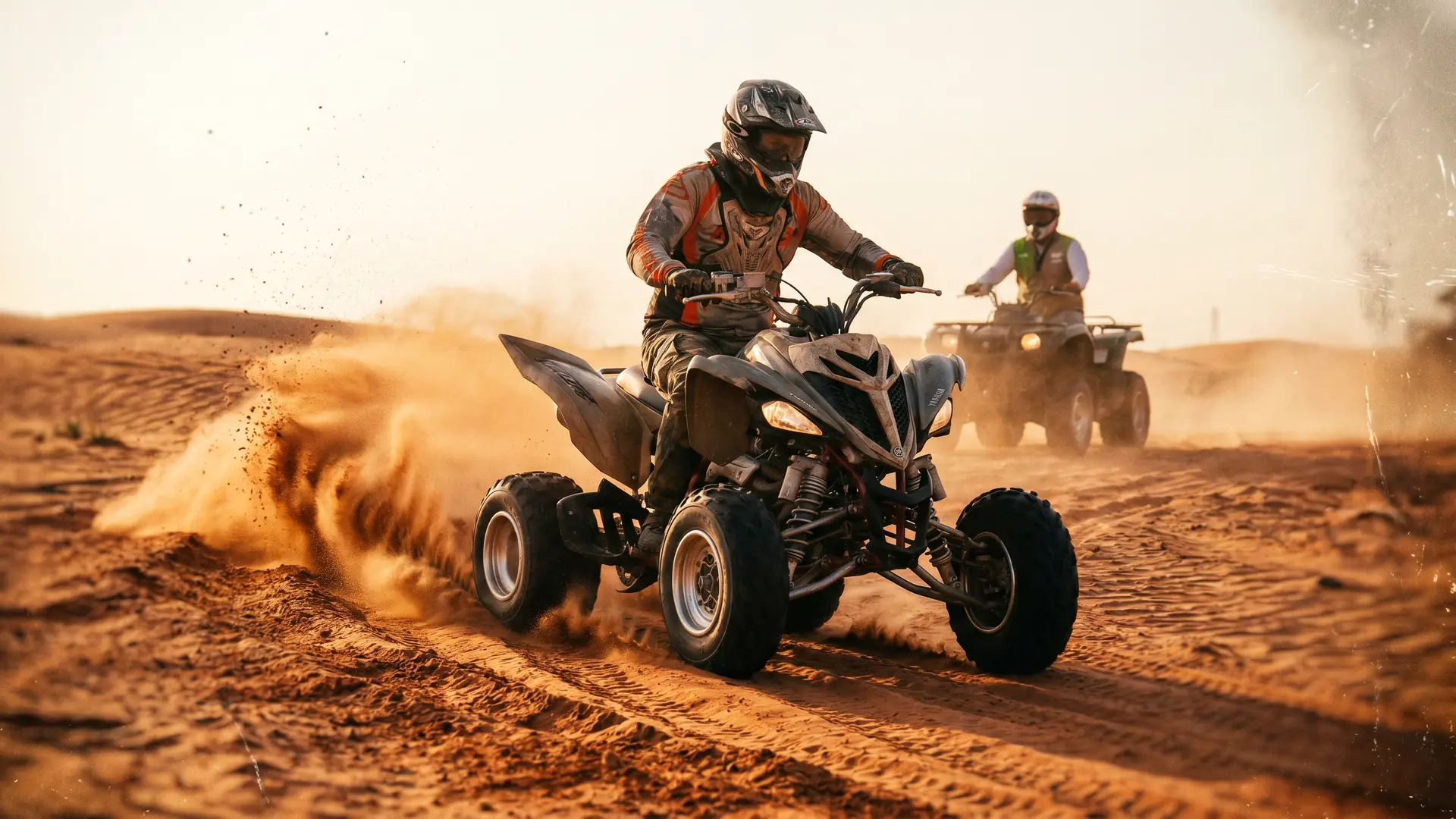 AED 700
Unforgiving if you sit still and hope for the best, but it rewards a rider who actually shifts their weight through a turn.
Book this ATV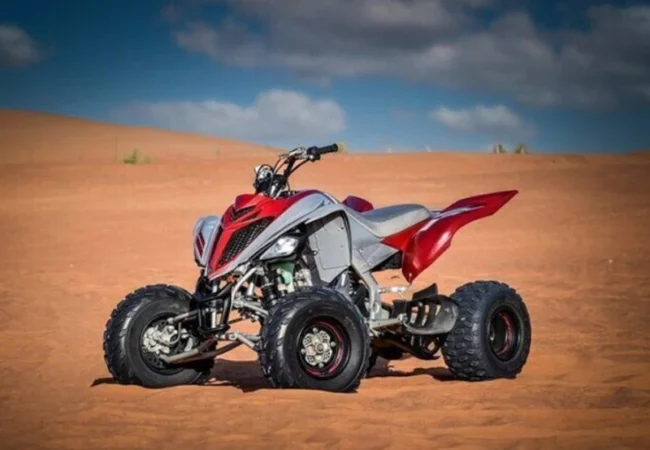 AED 795
Not something you simply request. Expect the guide to ask what you have ridden before handing this one over.
Book this ATVAl Lahbab is roughly 45 minutes each way, so most bookings stretch the riding into a fuller afternoon or evening rather than turning straight back. These four are the ones first-timers with a mixed group book most.
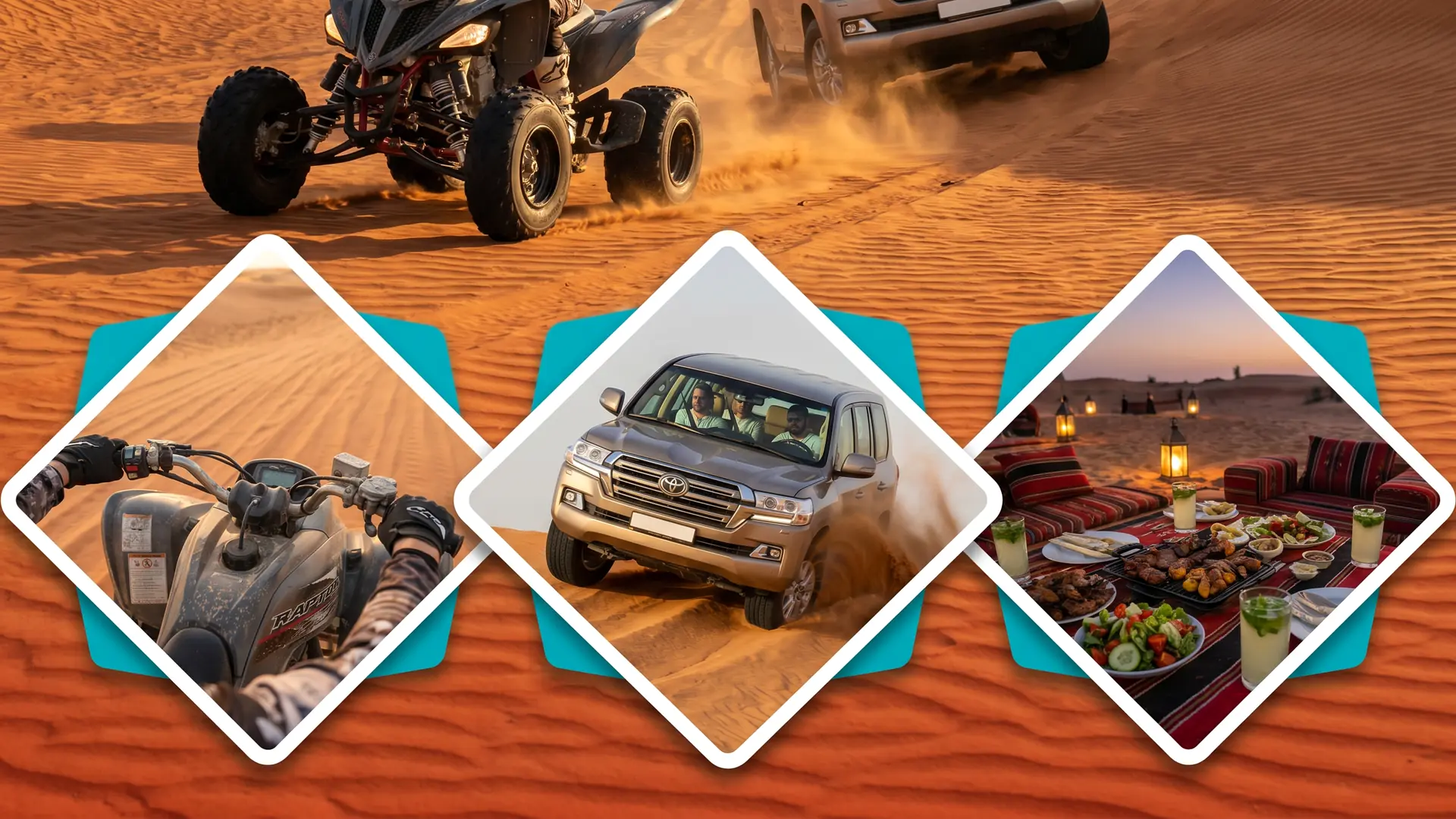 AED 375
Three parts, one booking: a beginner-paced ATV session, a Land Cruiser dune-bashing run for whoever in the group would rather not ride, and a halal BBQ dinner at the camp as the sun goes down.
Book this tour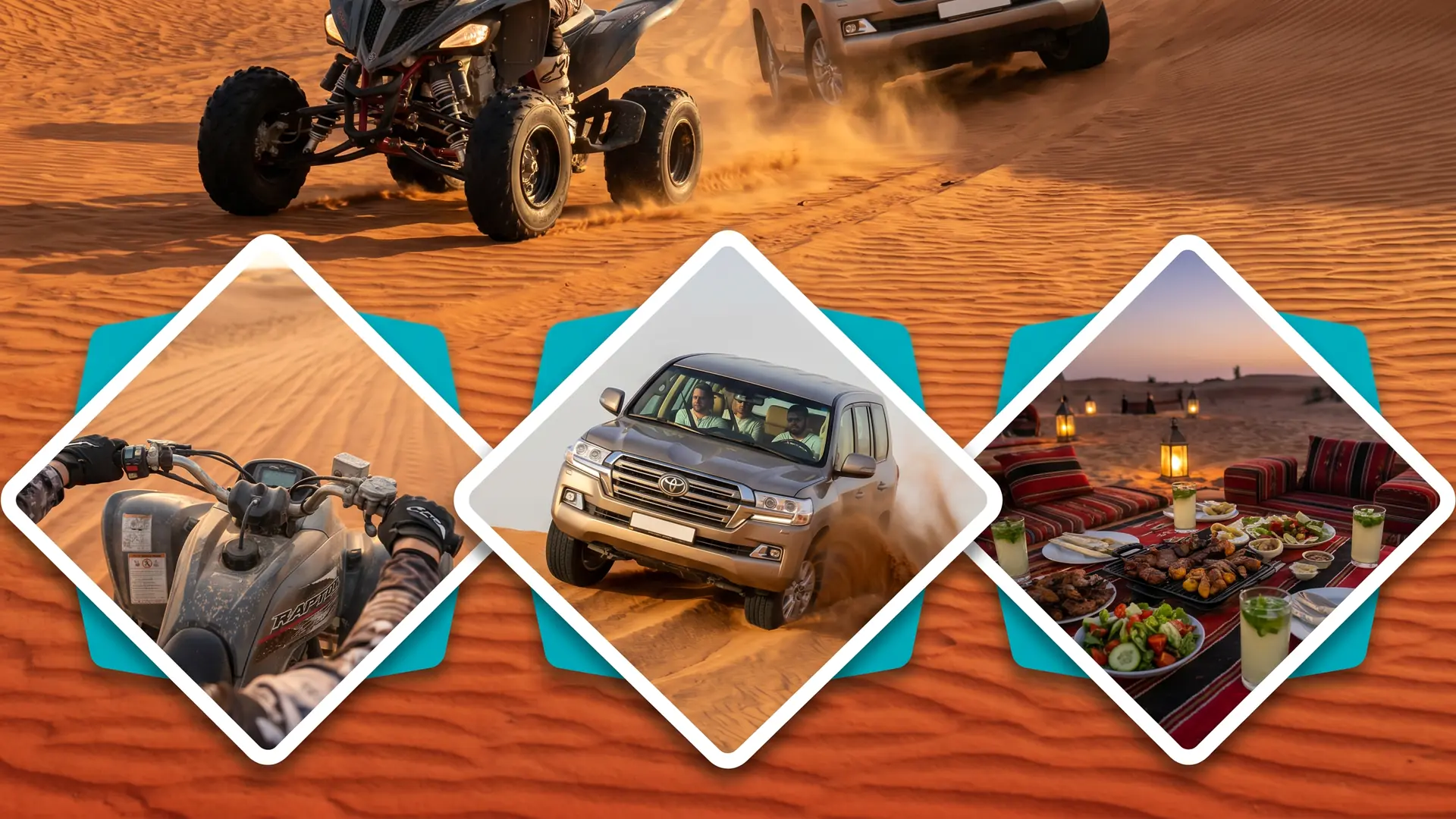 AED 290
Sand packed down overnight grips better underfoot, which genuinely helps a nervous first-timer, and you are still back with the afternoon free.
Book this tour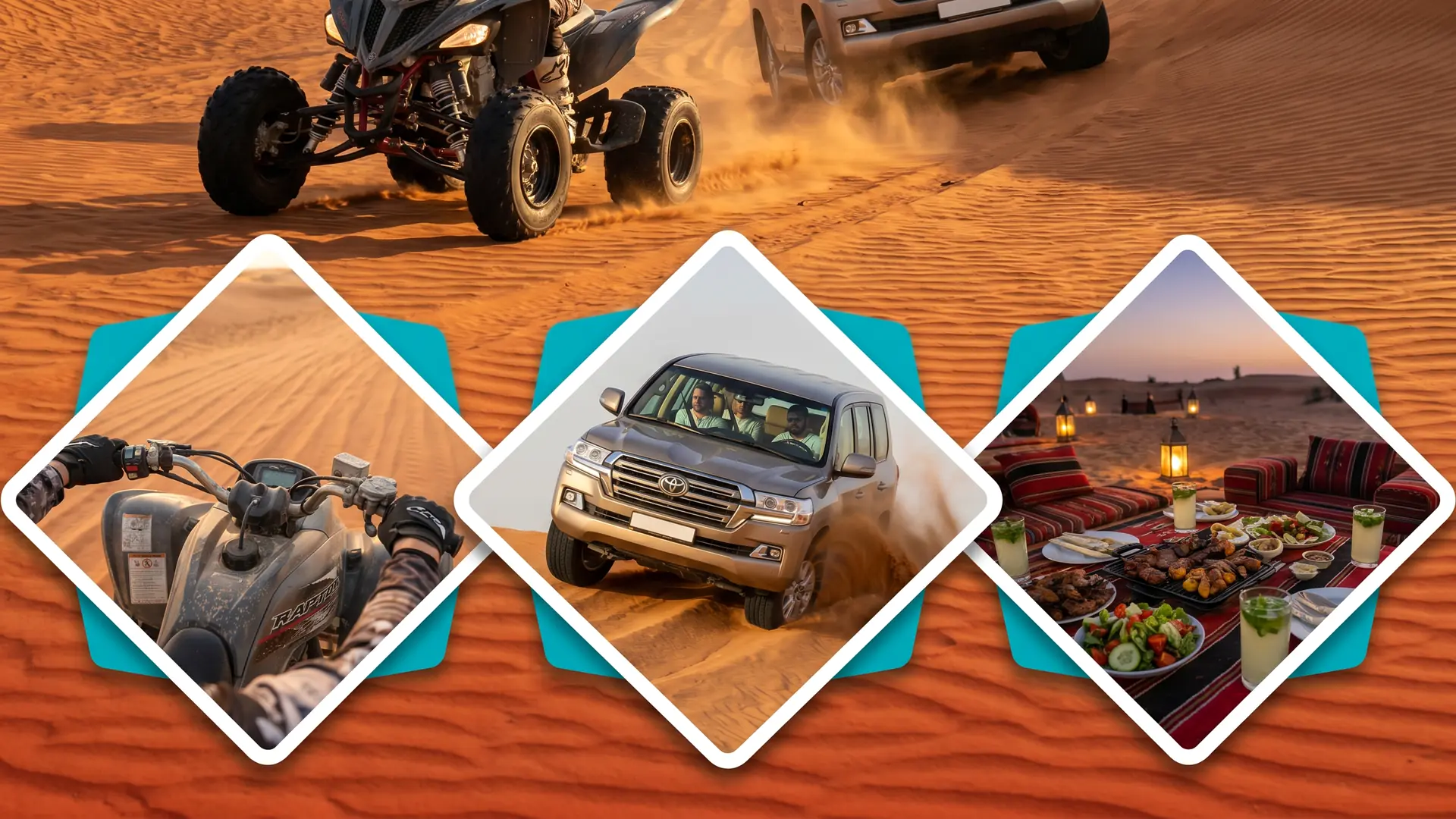 AED 700–1,300
Built for anyone who gets queasy as a passenger. Drop the dune-bashing leg entirely and keep the ATV, the camp and dinner. Price shifts with the machine chosen.
Book this tour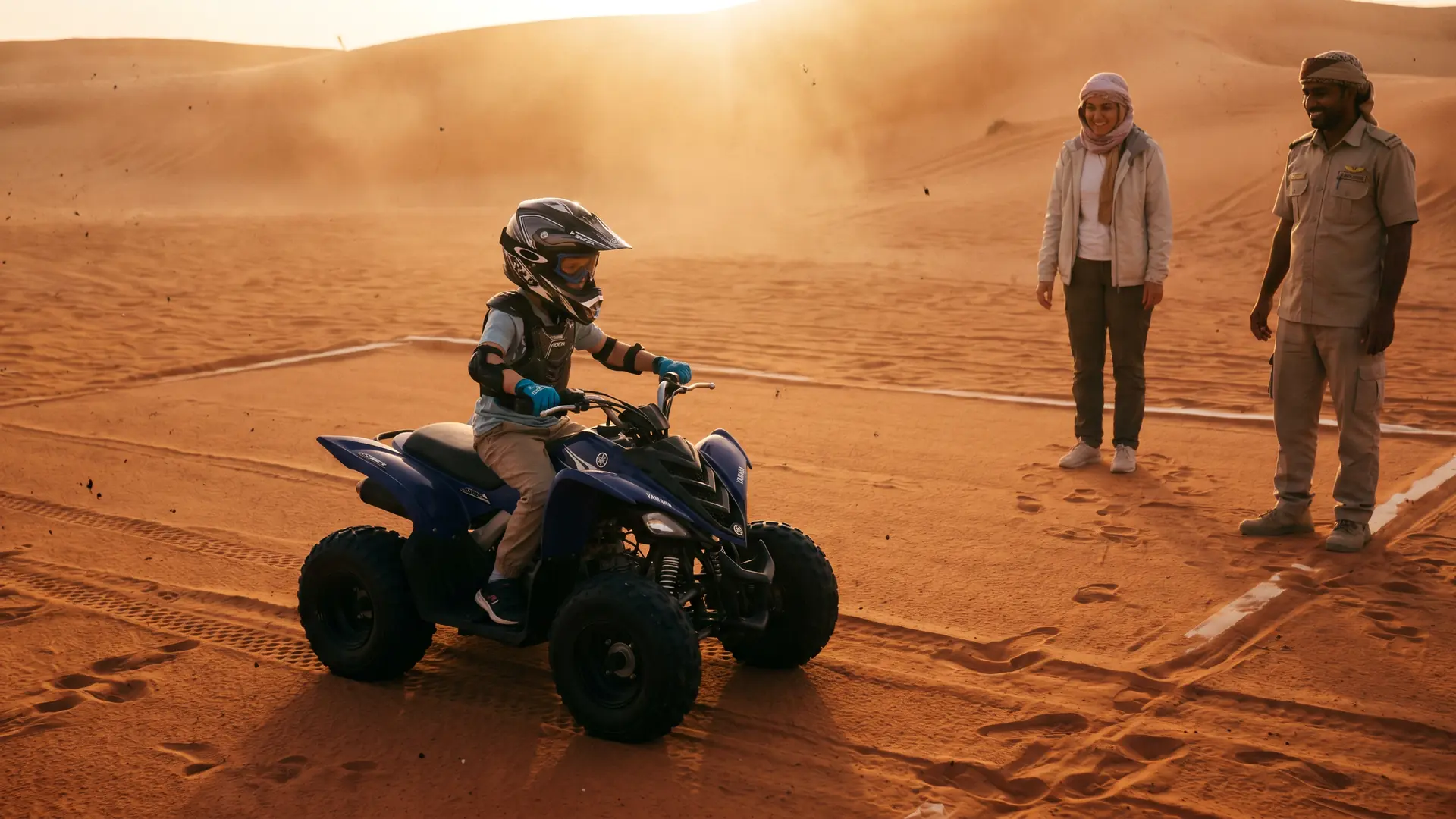 AED 150
Kids and adults do not end up on two separate trips here. The 90cc loop for children runs under supervision from the same base, at the same time, as the adults' full route, so the whole family sets off and finishes together.
Book a family tourA steering wheel does not count as throttle experience — the guide is really asking about time on a motorbike, jet ski or dirt bike, anything where your right hand controls the speed.
The drive genuinely shapes how the booking works out.
An ATV asks you to balance on top of it; a buggy straps you into a caged seat behind a proper steering wheel, with room for passengers on most models. A fair few nervous first-timers end up choosing this instead.
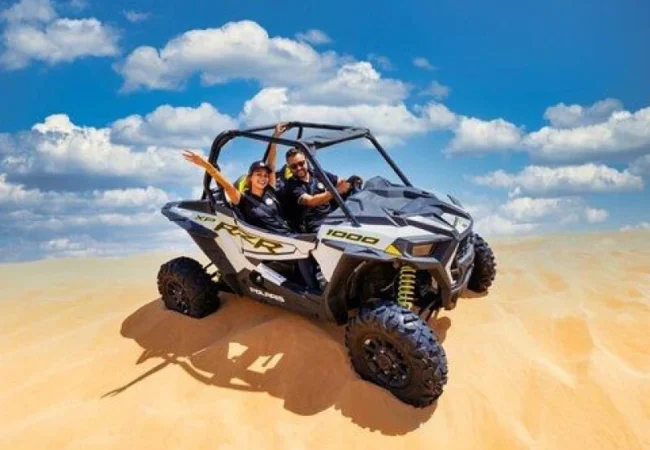
The easiest buggy to settle into first. Predictable, forgiving of a misjudged line, and simple to correct.
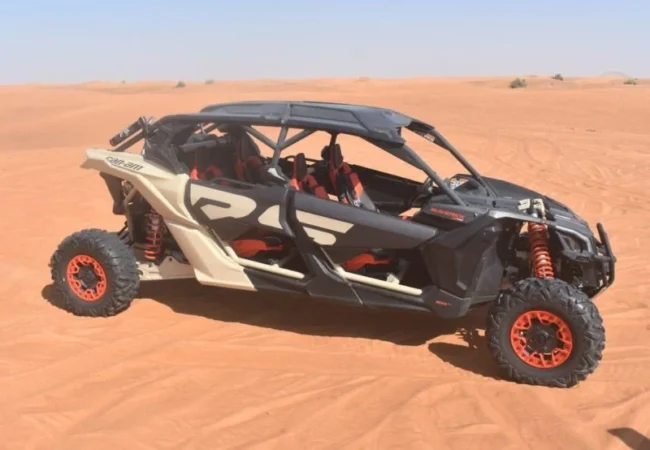
Wide and long-travel enough for the whole group in one vehicle, priced per buggy rather than per seat.
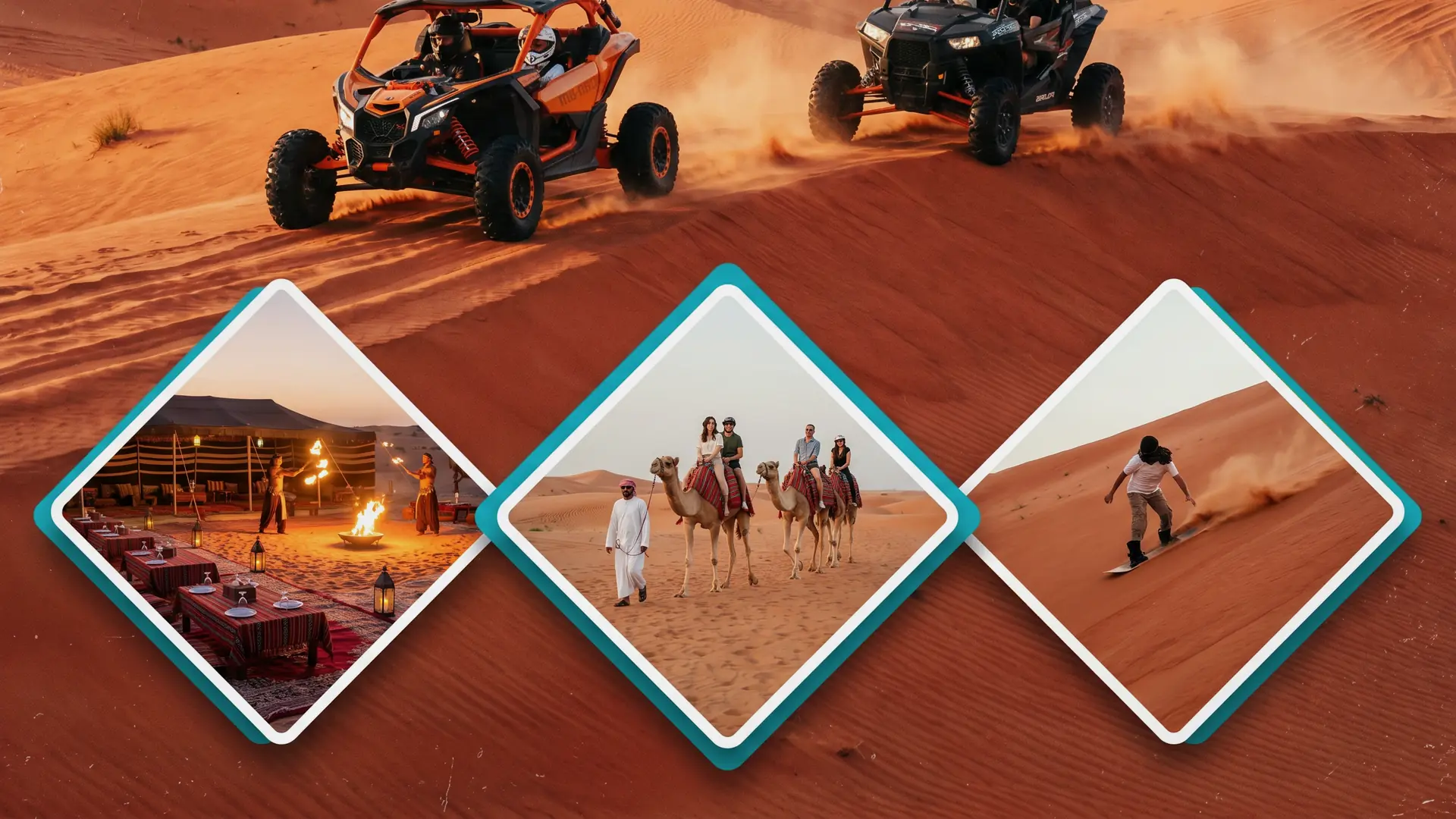
Try the ATV leg first while your grip is fresh, then swap into the buggy for the second half. Typically AED 290–1,100 depending on the machines picked.
A KTM only goes out with a rider who already has real hours on two wheels — that is not a suggestion, it is the entry requirement. An ATV's four wheels forgive a clumsy line through soft sand; a dirt bike's two do not, so the same mistake a beginner shrugs off on the quad can put a rider down out here.
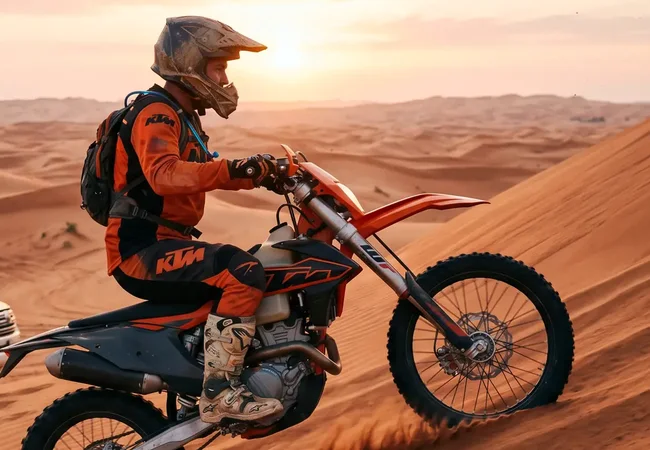
AED 850 for an hour, AED 1,250 for two. Bring genuine off-road experience with you, not just enthusiasm for the idea.
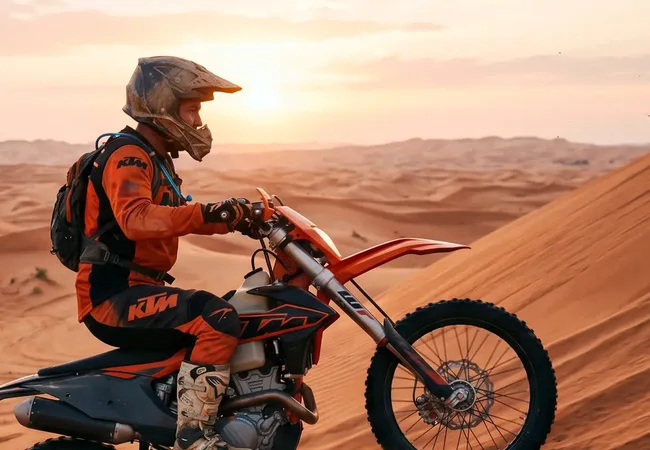
Nobody gets the keys to this one cold. A rider has to be watched on the 450 first, and only after that assessment does the advanced route — and a price — get discussed.
The Raptor 700cc delivers nearly the same thrill, just with a fourth wheel's stability while more riding hours are banked.
A Land Cruiser and a professional driver handle the dune bashing from AED 225, so nobody who skips the ATV is left out of the day. Most mixed groups book one of these alongside the riders.
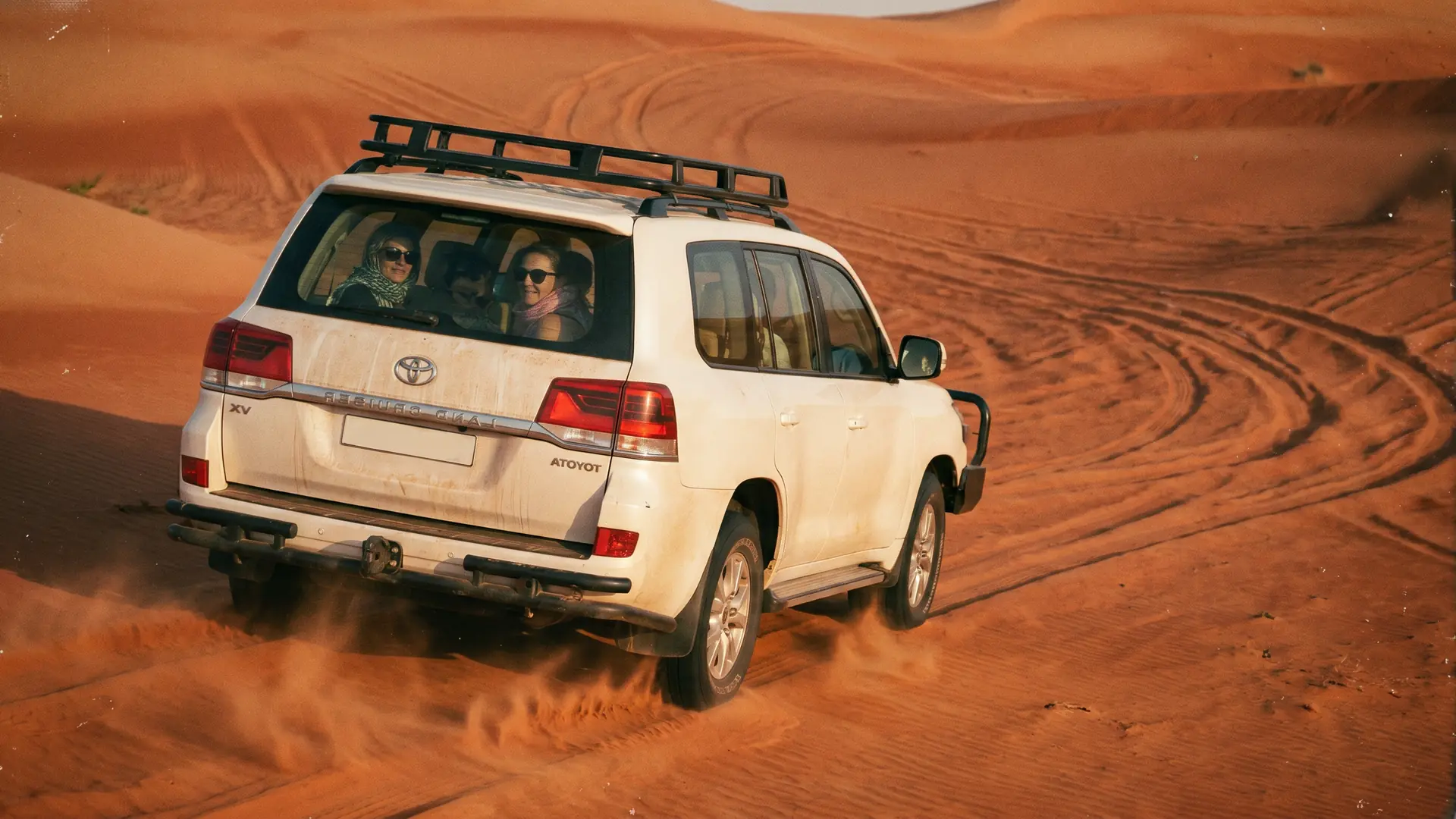
Departs early while the overnight air is still cool, back in the city with the rest of the day free.
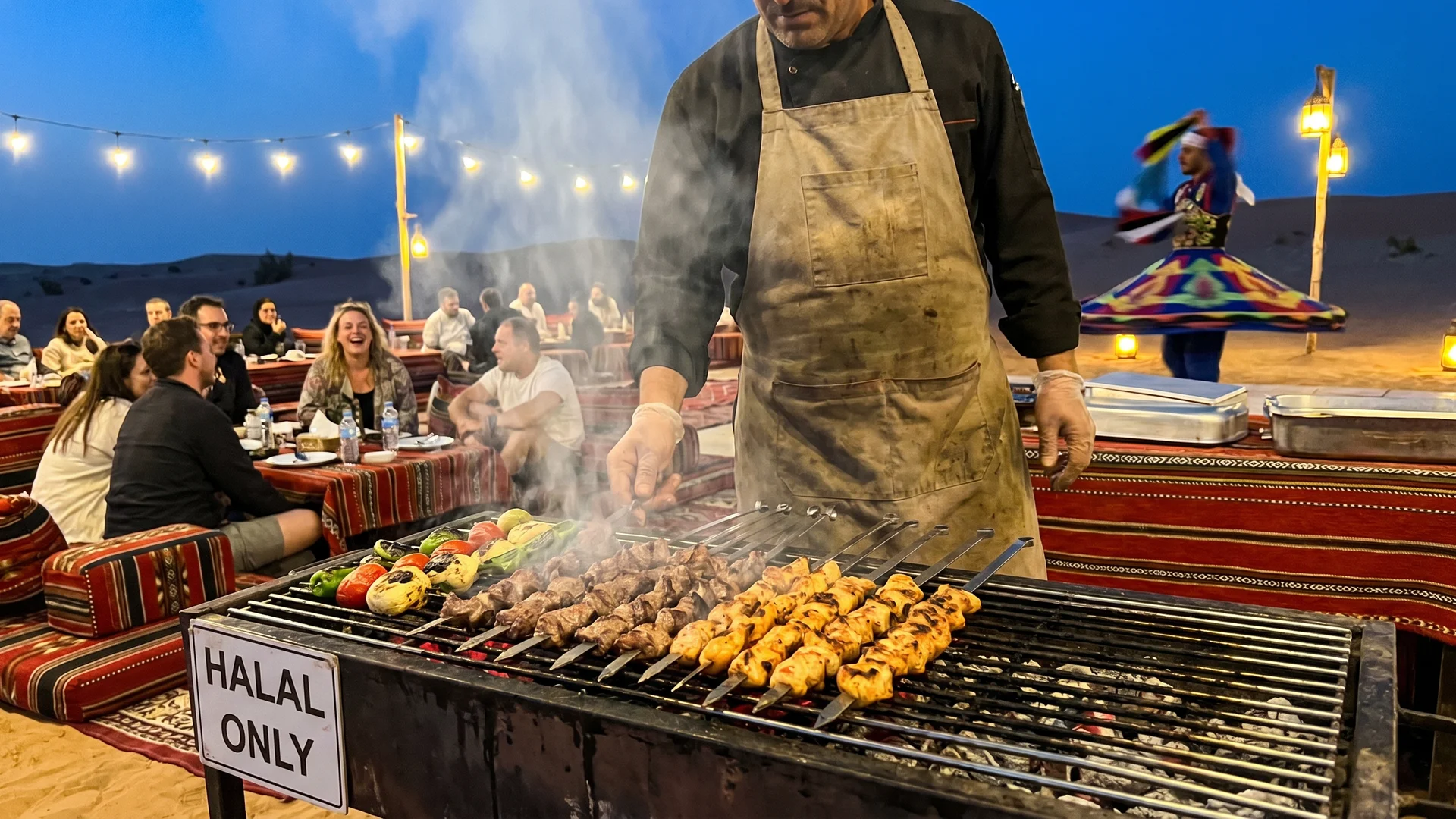
Dune bashing into sunset, then the camp for a halal BBQ dinner, transfers included both directions.
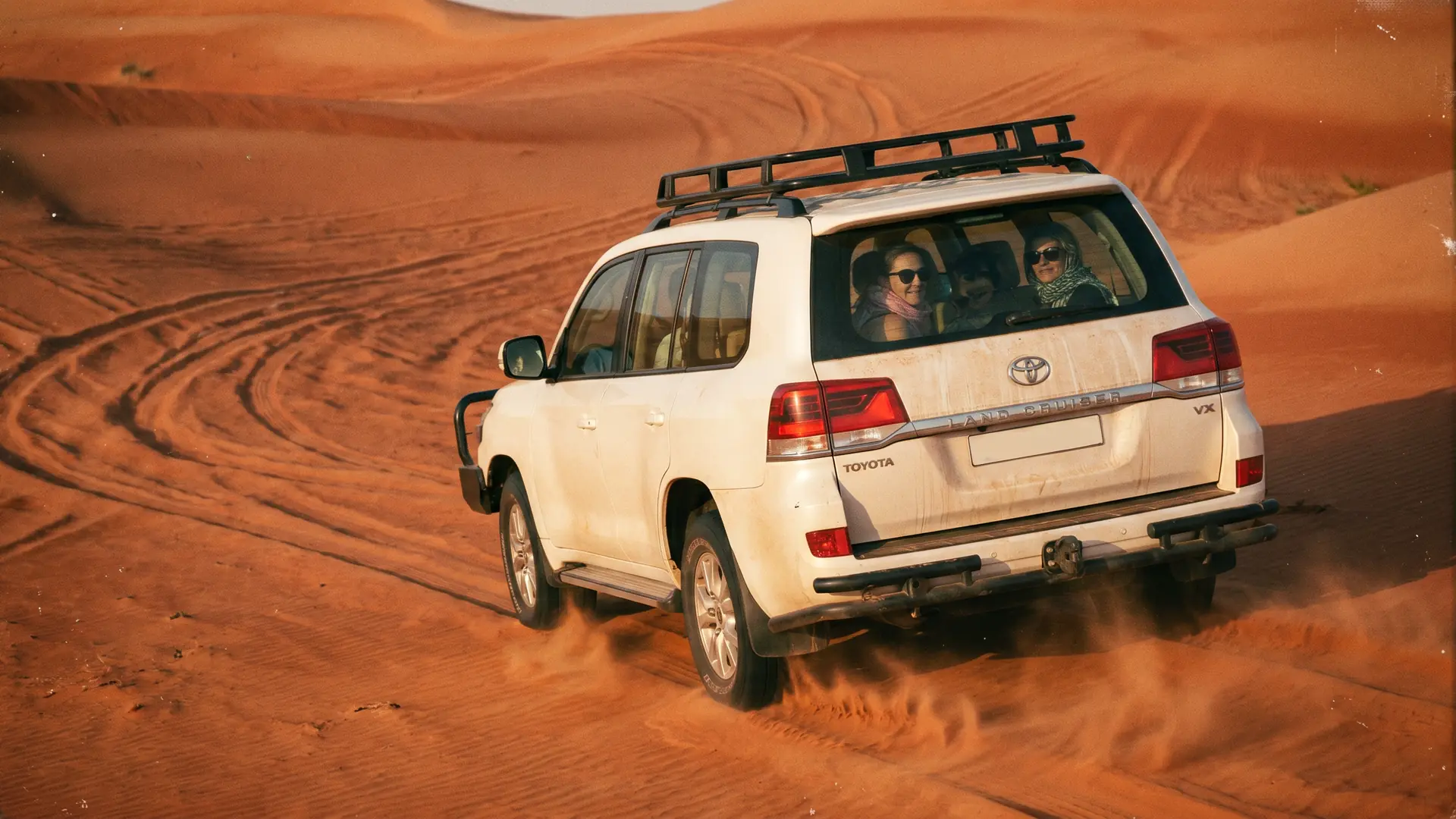
No sharing a vehicle, no sharing camp seating — the whole booking, timing included, is built around your group and nobody else's.
Overnight camping, corporate bookings and a private safari kept entirely to your own group do not show up in the list above — the private option runs AED 799 in the morning or AED 1,400 in the evening. Prone to motion sickness? Say so, and guides will happily route around the dune bashing altogether.
Hotel pickup is early, close to 4:30 AM, though you are back on solid ground again before most hotel breakfast buffets even wind down. Balloons fly roughly between September and May, and no other booking on this page is as weather-dependent as this one.
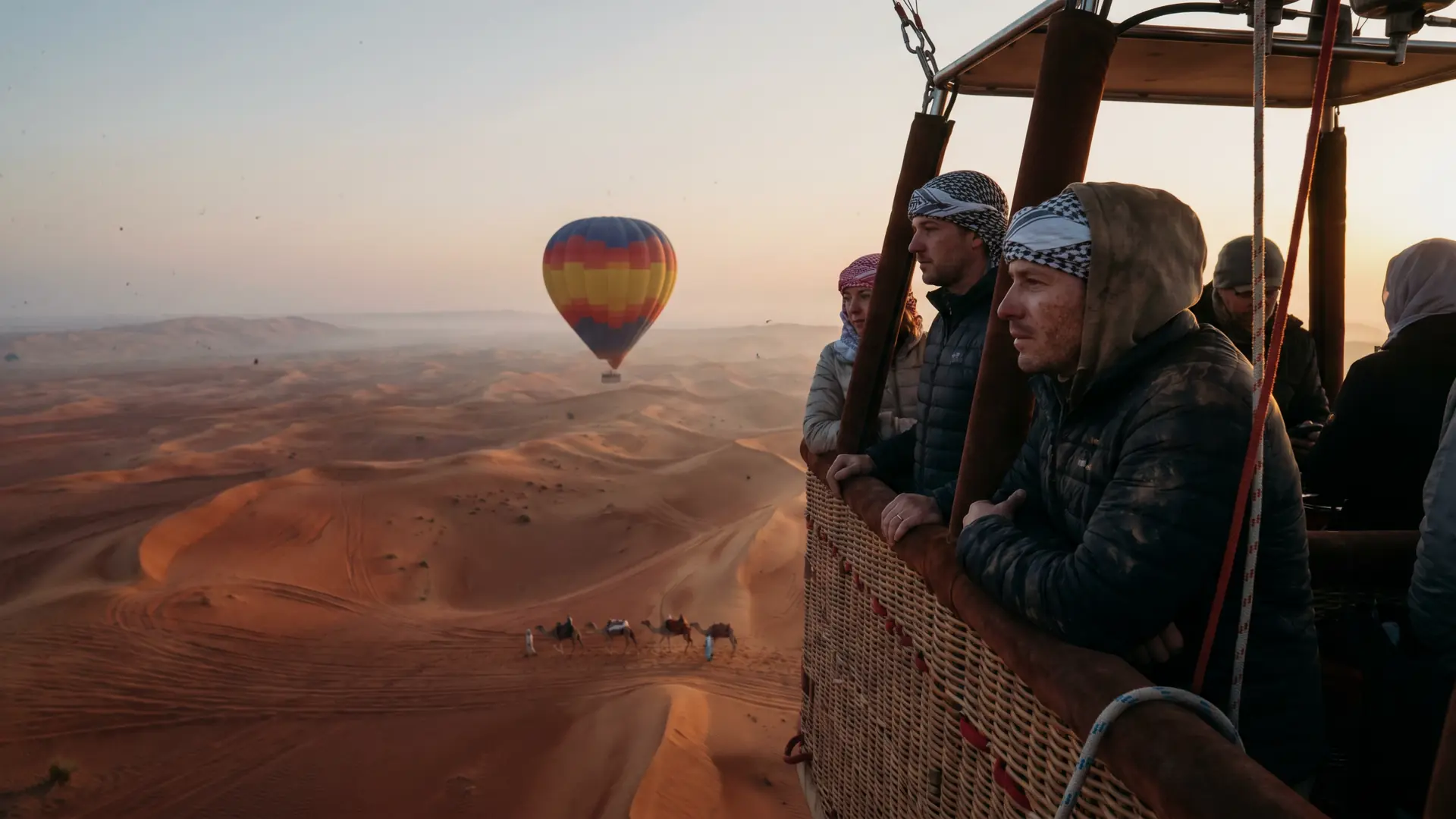
The standard flight is priced at AED 1,049. Add falconry and it becomes AED 1,149; swap in a full breakfast instead and it runs AED 1,349.
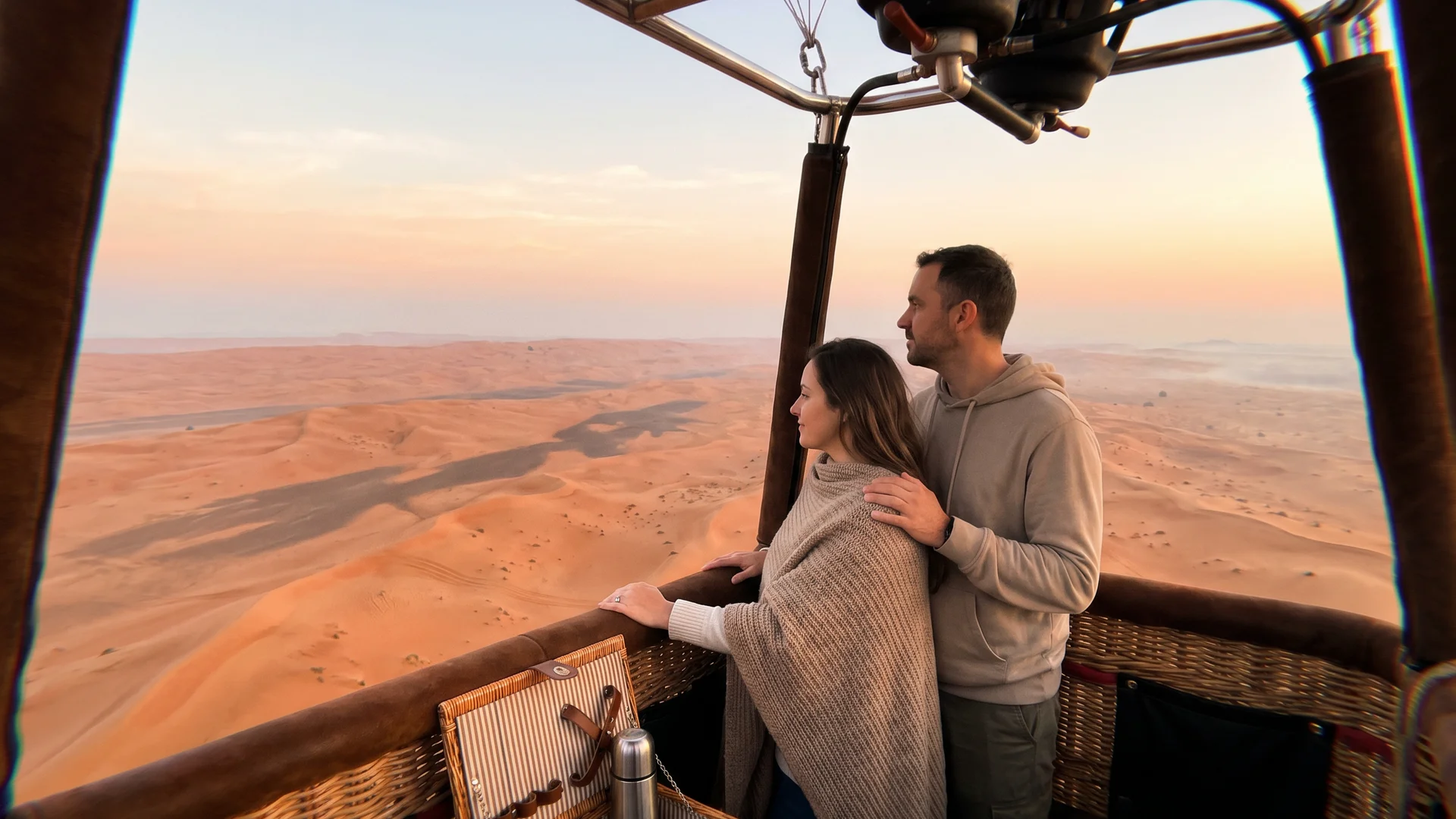
The basket kept to your group alone. A regular pick for proposals, anniversaries and corporate outings.
Grandparents, young kids and anyone who quietly ruled out the ATV section a few scrolls back all end up here for the same reason — nothing else on this page asks so little of the person booking it.
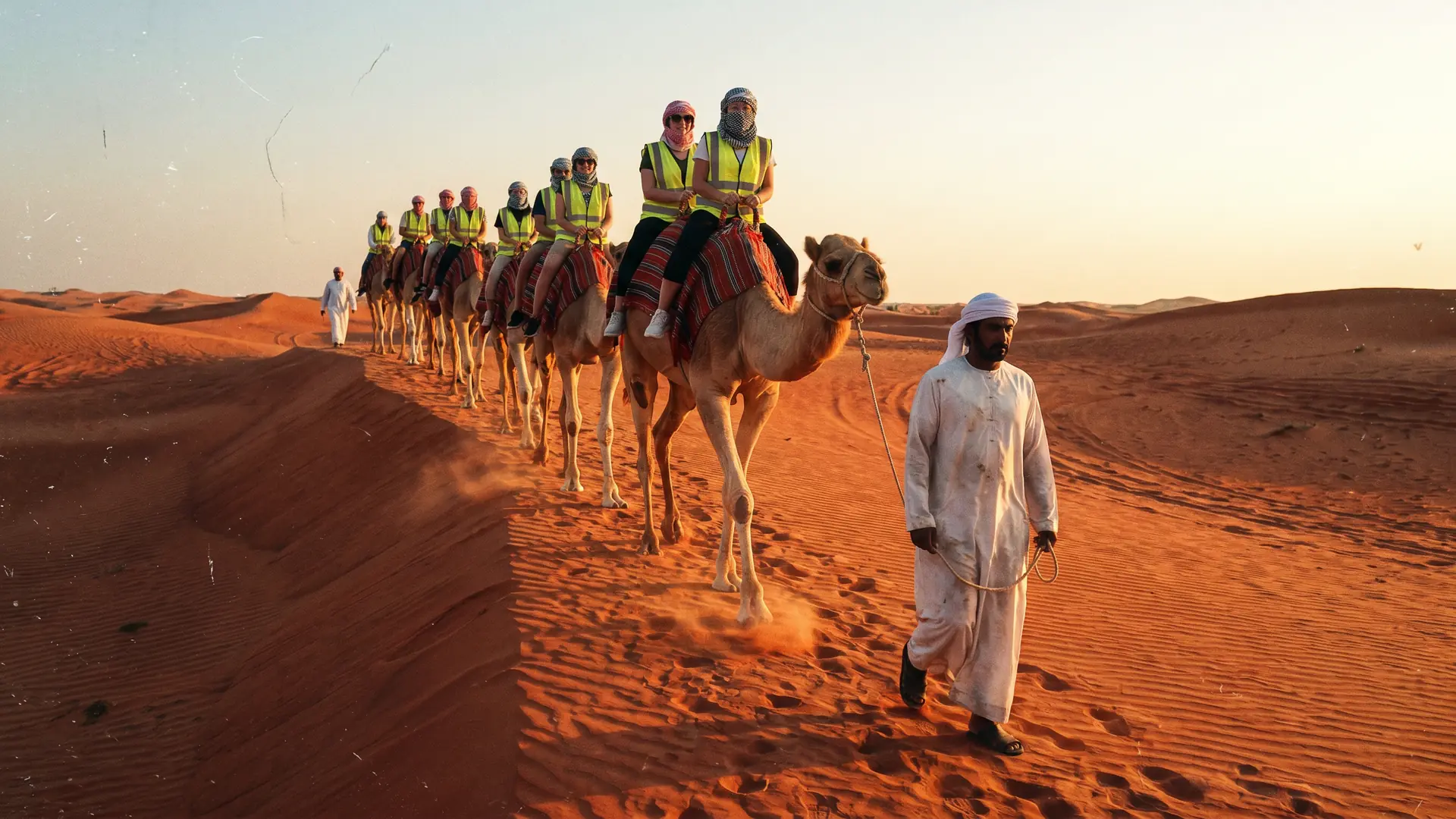
Same dunes the ATVs ride, at walking pace with a guide leading the way — open to riders as young as three as long as an adult rides along too.
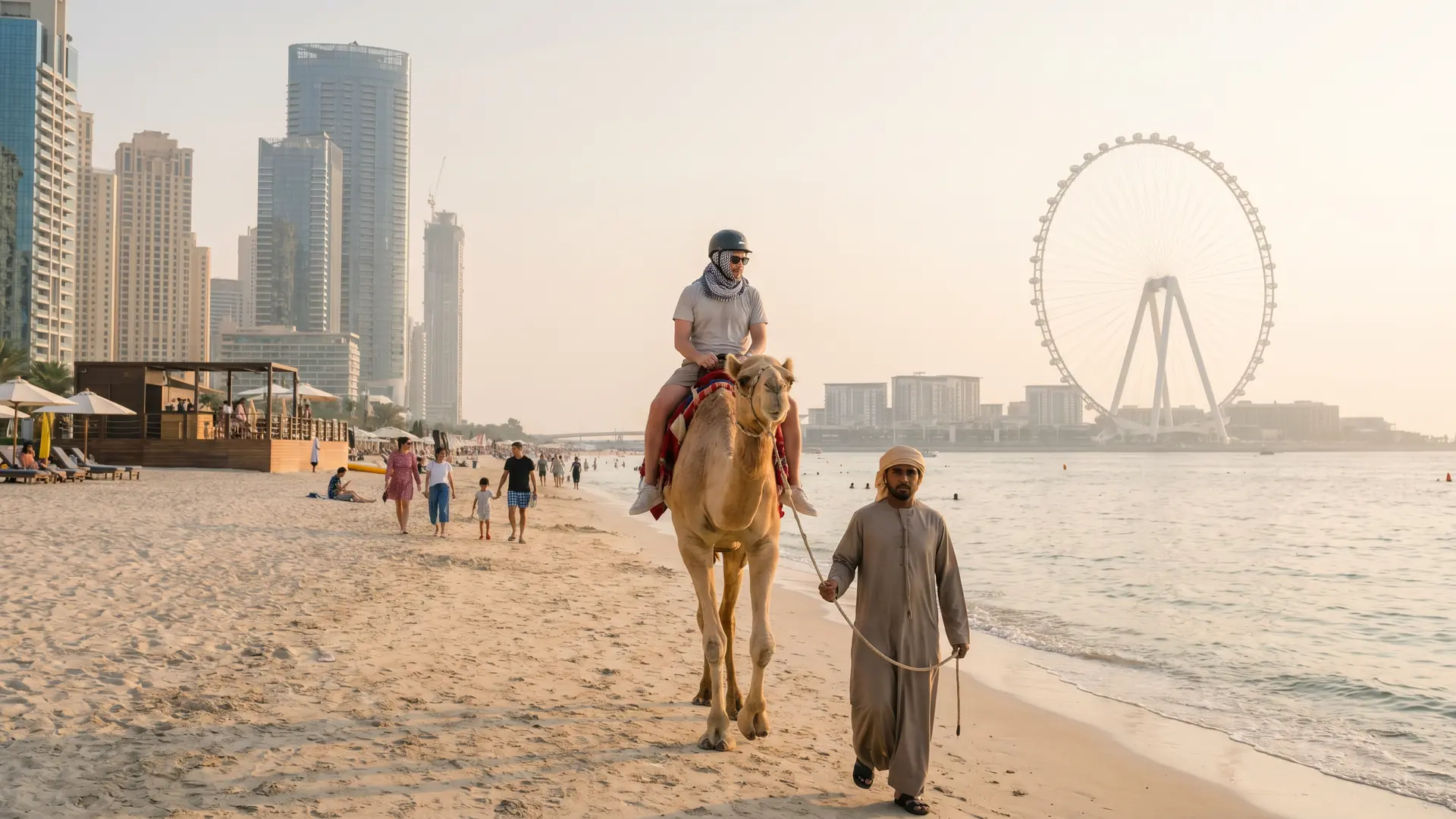
Right on the JBR sand, so no drive out to Al Lahbab is needed — and it is the photo most visitors are actually chasing.
Guided desert horse riding is also available from AED 575 for anyone who already has saddle time.
What you pay here depends entirely on what you build: how many people, which machines, how long a day. Rather than guess at a number, message over the shape of your group and a quote comes back the same day.
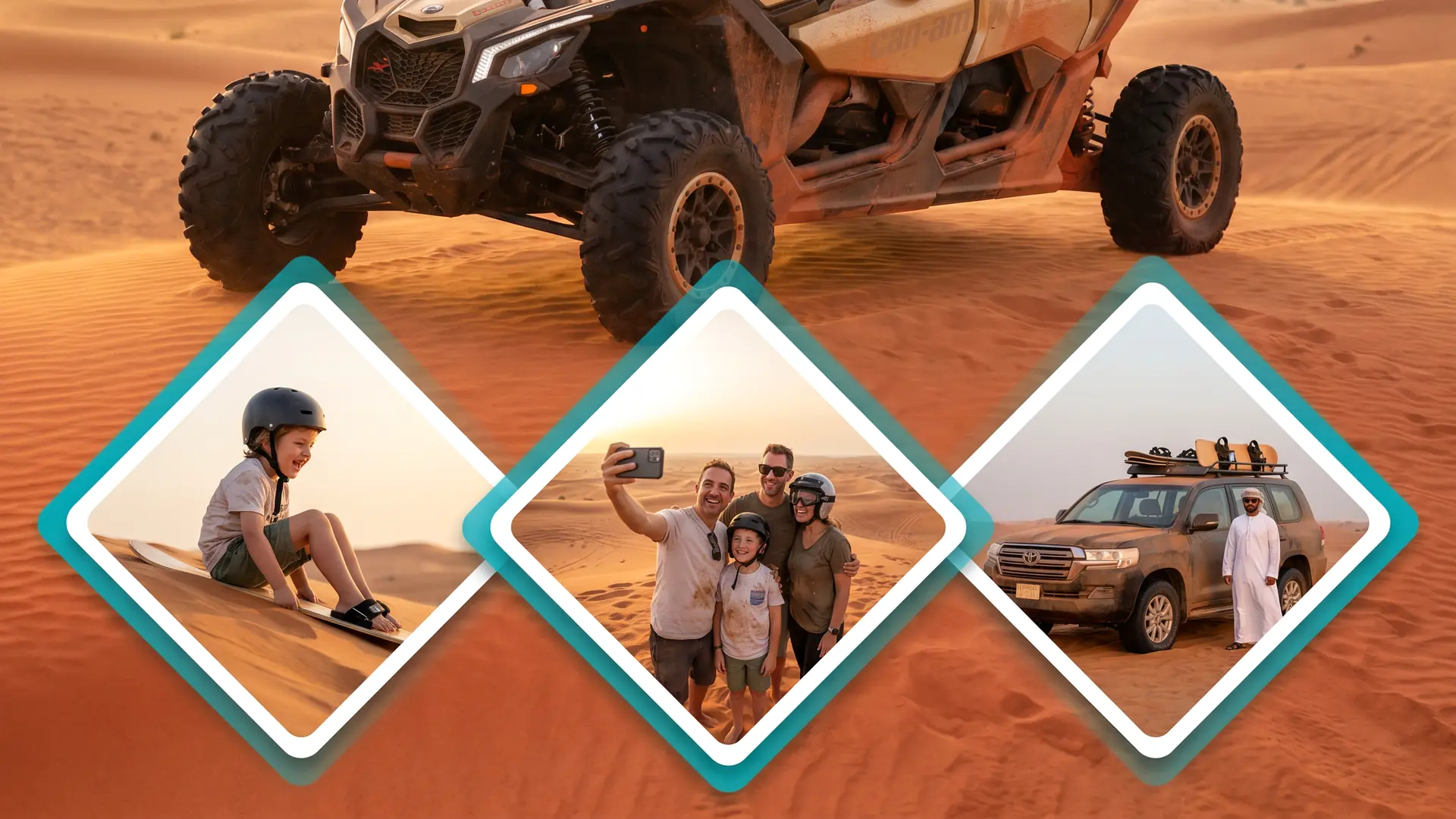
Stack the ATV, buggy, safari and BBQ into one day and the total usually settles somewhere between AED 700 and AED 2,200, depending on what gets combined. Open with a sunrise balloon instead of skipping it, and this becomes the single biggest day this site sells.
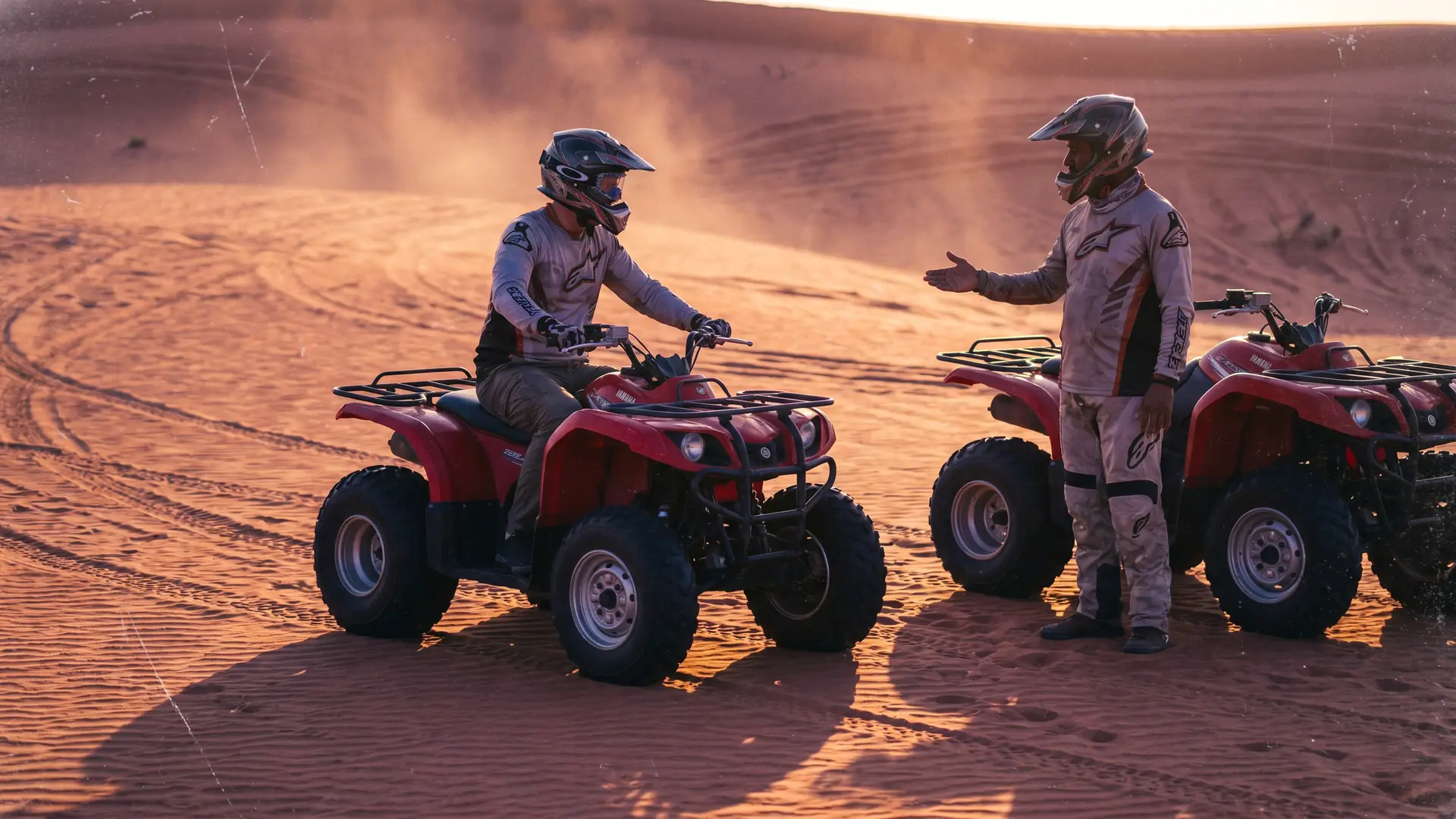
A dozen or more riders split across ATVs and buggies behind matched guides, run to whatever schedule the group needs.
Every session on this page — ATV, buggy or dirt bike — happens in one place: Al Lahbab, off the Dubai–Al Ain road on the southeast edge of the city. The red in the photos surprises people who assume it is a filter; it is not. What you are actually riding is proper bowls and ridgelines, a different texture entirely from the flatter ground nearer the highway that most first-timers have pictured beforehand.
Every session opens on flat ground back at base, not out on the dunes — that warm-up lap is where the real safety work happens, because it is how a guide reads each rider and matches them to terrain they can actually handle that day.
Nothing about this changes whether it is the standard loop or a full day out. Only the length of the riding section moves.
Staying in the city means a direct pickup, no meeting point to find. Driving yourself instead? The route to base lands in your inbox as soon as the booking is confirmed.
Helmet fitted first, then a plain-terms walkthrough of throttle, brake, body position and the hand signals used out on the route.
A few slow laps near the base while the guide watches control and balance, which is what actually decides the route ahead.
Single file behind the lead guide through the bowls and ridgelines at Al Lahbab, with stops built in along the way for water and photos.
Water, a breather and same-day photos handed over back at base, before heading into the city or straight into whatever combo was booked.
Combo bookings move straight on to the Bedouin-style camp from here for dinner, with no separate transfer needed.
The 90cc lane stays supervised for the nine-to-twelve age bracket, guardian present throughout. Younger children can still join a buggy ride seated beside a driving adult, or take a camel out from age three. If someone in your group is a borderline case, flag it before payment rather than at the briefing, so there is actually time to sort it out properly. On the sand, final authority sits with the guide, full stop — Dream Land Adventure Tourism holds the DTCM licence this operation runs under.
Based on 762 Google reviews
Based on 1,458 reviews
Think of it as four price tiers rather than one flat number. Kids' supervised 90cc: AED 150. First-timer's 220cc: AED 200. The 400cc most people graduate to once they're comfortable: AED 250. The Raptor 700cc, released only once a guide has cleared you for it: AED 795. Bundle the ride with the Evening Desert Safari and BBQ and the total comes to AED 375; skip dinner for the morning version at AED 290.
Depends which side of the Atlantic you learned the word on. North Americans call it an ATV; here in the Gulf, quad or quad bike is what actually gets said out loud. Same four wheels, same single rider, same machine either way — only the name changes with the accent.
Al Lahbab, roughly 45 minutes southeast of Downtown off the Dubai-Al Ain road. Nobody runs sessions closer to the city on purpose — that extra drive is what gets you to sand that is genuinely that deep red colour, instead of the paler, flatter ground you would hit if a tour stopped at the first dunes past the highway.
No to both. The land is private, not public road, so no licence applies, and the 220cc exists specifically for someone who has never ridden anything with a throttle before. There is a full breakdown of what that actually looks like further down this page.
Guided, the whole way. You ride your own machine, but a lead guide sets the route, the spacing between riders and the pace, and nobody heads off into the dunes without one. The group moves at the pace of whoever is least confident, not the fastest rider.
Nine years old, and even then only on the supervised 90cc, kept to its own loop with a guardian present, at AED 150. A younger child is not left out of the day itself — riding along as a buggy passenger beside a driving adult works below that age, and camel rides are open from as young as three.
Not by default — pickup is quoted as an extra before payment, with Downtown, Business Bay, Marina, JBR and Deira all handled routinely. Self-driving is just as easy; directions land as soon as the booking is confirmed.
Budget roughly half a day once the drive is added in. The riding itself is just one session on the standard loop, but Al Lahbab is about 45 minutes each way from central Dubai, and that round trip is exactly why so many riders extend the booking into a safari or a dinner rather than driving out and back for one session alone.
Closed-toe shoes are the one fixed rule, plus sunglasses and clothing you will not be upset to see covered in sand. Helmets are supplied and fitted for you. A face buff or light scarf is worth packing too, and there is a fuller kit list further down this page.
It happens on most sessions to somebody, usually from easing off the throttle partway up a dune face, and the guide simply comes back and frees it. No charge, no fuss, a couple of minutes lost at most.
ATVs suit a group where everyone wants to drive, since pricing is per rider. A buggy suits a group where only one or two people want control, since one fee covers the whole vehicle regardless of passengers. Plenty of mixed groups book both and ride out together.
Yes, just not at midday. From roughly late May through September, sessions get pushed to early morning or late afternoon to dodge the worst of the heat on open sand. Outside that window, October through April, normal daylight hours work fine.
It gets rescheduled rather than simply cancelled, with alternative slots offered in advance at no extra cost. ATVs generally handle marginal weather better than most other activities here; the balloon flights are usually first to be grounded.
A few days ahead is usually enough midweek; for a Friday or Saturday, aim for closer to a week out. The late-afternoon slots and the Raptor 700cc tend to book out first. Secure online advance payment confirms your booking, with pickup timing confirmed over WhatsApp the day before.
No driving licence, no prior riding hours, nothing to prove before you book — the 220cc at AED 200 exists specifically for a first attempt, and every rider works through a flat-sand warm-up and a full briefing before a guide lets anyone near an actual dune. Kids between nine and twelve have their own lane too: a supervised 90cc track at AED 150.
Most first-timers travelling with non-riders end up on the Evening Desert Safari with ATV and BBQ at AED 375 — a shorter, beginner-paced ATV session folded into a Land Cruiser dune-bashing trip and a camp dinner, so the whole group arrives and leaves together. Secure online advance payment confirms your booking, support available 24/7.
No licence, no experience needed — the machine guides recommend for a first attempt.
AED 200A shorter ATV leg, dune bashing for the group, dinner at the camp.
AED 375Kids loop a supervised track while nervous adults get their own gentle route.
AED 150Your own vehicle and timing, no pace to match against faster riders.
AED 799For anyone who would rather float over the dunes than steer through them.
AED 1,049A wheel, harness and seatbelt instead of handlebars — an easier on-ramp for nerves.
AED 599What a first machine turns into once the nerves wear off.
AED 795The oldest, slowest way across the same sand, for anyone sitting the ATV out.
AED 150No licence and no riding history of any kind. The dunes at Al Lahbab are private desert land rather than public road, and the 220cc exists specifically for someone who has never twisted a throttle before.
The word licence trips people up because ATV and quad bike sound like registered road vehicles, and in plenty of countries a small off-road machine does need one. None of that applies here. Riding happens entirely off the public road network, on land the operator runs under a DTCM licence, which is the only licence actually involved in the booking. Your driving licence, or lack of one, back home has no bearing on whether you can ride.
Experience works the same way. Most first-time bookings are exactly that, first-time, and the whole structure of the tour assumes it rather than treating it as an exception to plan around. A guide is not hoping you already know how to ride; they are expecting to teach you the basics in the first ten minutes and watch you apply them on flat ground before anything steeper.
What actually matters instead of a licence is honesty at the briefing. Say plainly if you have never ridden anything with a throttle, including a bicycle off-road or a jet ski, and the guide pitches the whole session differently for you than for someone who mentions years on a dirt bike. Riders who exaggerate their background to sound capable are the ones who end up on a route that outpaces them, not because anyone tested them and they failed, but because the guide had the wrong information to work from.
The one document that does get checked at base is identification, for the waiver every rider signs regardless of age or background — a passport or Emirates ID both work, and nobody is ever asked to produce a driving licence at any point in that process.
Nine years old is the floor, and only on the supervised 90cc track with a guardian present. There is no posted height or weight chart at check-in; suitability comes down to whether a rider's hands and feet reach the controls properly, judged in person rather than off a number.
Age is the one line that is fixed rather than judged case by case. Riders from nine to twelve stay on the 90cc, on its own marked loop, with a guardian standing right there for the whole session — that machine never joins the open dune route. Thirteen and up, a young rider who is tall enough to comfortably reach the footpegs and handlebars typically moves onto the 220cc alongside the adult group, at the guide's discretion on the day rather than a rule fixed in advance. Below nine, solo riding is off the table entirely, though the day itself is not out of reach — tag along as a passenger on someone else's buggy, or hop on a camel instead, which takes riders from as young as three.
Height and weight get handled far less formally than age. There is no scale at reception and no marked height stick the way a theme park uses one. What a guide is actually checking, in the few minutes before the warm-up, is whether you can sit with your feet flat on the pegs and your hands relaxed on the grips rather than stretched or cramped — that posture matters more for control than any specific number would.
Riders on the larger end of the scale are not turned away; they are usually pointed toward a sturdier frame like the Grizzly 450 rather than one of the lighter machines, simply because a heavier build sits and handles better on something built for it. If you are unsure where you or someone in your group fits, describing height and build on WhatsApp before the day gets you a straighter answer than guessing on arrival.
A parent or guardian still signs the waiver for anyone under eighteen, even a confident teenager riding the adult 220cc, so that paperwork is worth settling before arrival rather than at the check-in desk.
Gear first, then a hands-on walkthrough of throttle, brake and body position, then a supervised warm-up on flat sand before anyone rides toward a dune. Nobody skips straight from paperwork to the open route.
The briefing starts with equipment, not talk. A helmet gets fitted and adjusted properly rather than just handed over, because a loose helmet is its own hazard once the machine starts moving over uneven ground. From there the guide walks through the controls in plain terms: how much throttle actually does at a stop versus moving, where the brake is and how much pressure it needs, and the hand signals used out on the route to mean slow down, stop, or follow closely.
Body position gets more attention than most first-timers expect. Sitting rigid and upright feels safer instinctively, but it is the position that tires you out fastest and transmits every bump straight into your arms. Guides show riders how to stay loose through the shoulders, shift weight back on a descent, and lean forward slightly on a climb, all of it demonstrated on the spot rather than just described from a clipboard.
The warm-up itself is just a handful of easy laps on flat sand close to base, dunes nowhere in sight yet, and it carries more weight than anything filled in on a form before you arrived. While you loop around, the guide is quietly reading throttle control, brake smoothness and how your body handles small bumps, then matches the route ahead to what they actually saw rather than what you told them about yourself beforehand.
The drive out passes through Al Awir before the road turns properly to sand at Al Lahbab, and that last stretch is usually where the nerves from booking start settling into simple curiosity about what is actually coming.
Closed-toe shoes, clothes you will not mind losing to sand, and sunglasses under the helmet visor. A buff or scarf for your face matters more than anything else on this list once the ride is actually moving.
Footwear is the one non-negotiable. Sandals and flip-flops leave your feet exposed against the footpegs and offer nothing if you have to put a foot down quickly on loose sand, so trainers or closed boots are the baseline for every rider regardless of experience. Beyond that, clothing is mostly about tolerance for mess rather than protection — sand works into cuffs, collars and pockets over the course of a session, and an outfit you actually care about is the wrong choice for the day.
Sunglasses do double duty under a helmet visor, cutting glare off the sand as well as keeping grit out of your eyes on a dusty stretch behind another rider. A face buff or light scarf beats sunglasses for usefulness, honestly, since it covers the part of your face a visor does not, and riders who skip it usually regret it by the second dune. None of this needs buying specially; whatever you already own that fits the description works fine.
Helmets are handled for you, fitted and adjusted at the briefing, so that is one item off the list entirely. Worth packing separately: a change of clothes left in the car or with your driver for the ride home, water for the drive back beyond what is provided on site, and if you are filming, a chest or helmet mount rather than trying to hold a phone through a climb.
Long hair is worth tying back before the helmet goes on, and loose jewellery is safer left at the hotel than fished out of a chin strap at the roadside once everyone is ready to move.
Genuinely, no — not on the 220cc, and not with a guide pacing the group around whoever is least confident. It takes real concentration for the first ten minutes and then starts feeling ordinary faster than most first-timers expect.
Being honest about this rather than overselling it: the first few minutes on flat sand during the warm-up do feel unfamiliar. The machine wanders slightly under you as the tyres search for grip in a way a car or bicycle never does, and throttle response on sand is less linear than on solid ground — roll it on too fast from a stop and the back wheels spin before they bite. None of that is dangerous on the 220cc at warm-up pace, but it does register as new, and that newness is exactly what catches people off guard if nobody warned them about it beforehand.
What actually makes it manageable is that nothing about the first climb is sudden. The route builds gradually from flat sand into gentle rises before anything resembling a proper dune face, and the guide is watching closely enough during that stretch to slow the whole group down if one rider is visibly struggling. Riders comparing an ATV to a Polaris RZR buggy sometimes assume the buggy must be easier because it has a wheel and a seatbelt, but plenty of first-timers actually find the ATV more intuitive precisely because your own body weight is doing part of the steering, the same way it would on a bicycle. Riders who have already stopped for photos at Big Red on the way to Hatta sometimes picture Al Lahbab as one more gentle roadside mound; it is not, the terrain here runs to proper bowls and ridgelines, which is exactly why the warm-up and the gradual route matter more than they might expect.
By the second or third gentle rise, most nervous first-timers have stopped thinking about the controls individually and started reacting to the terrain instead, which is really the whole point of the warm-up and the gradual route that follows it. It does not become effortless in one session, and it should not be sold as though it does — but hard to control, for a beginner kept on the machine and route built for beginners, is not an honest description of what actually happens out there.
Yes, and it is closer to the normal booking than the exception. Guides pace the group around the least confident rider, and anyone who would rather not ride at all still has a seat in the safari vehicle or a spot on a camel.
Groups rarely arrive with matched confidence, and the tours are built around that reality rather than an assumption that everyone rides the same way. A parent who has ridden dirt bikes for years and a teenager doing this for the first time can book the same session, on different machines if it suits them, and still ride together behind one guide who sets the pace to the slower rider rather than splitting the group. A confident adult who would rather have a wheel than handlebars can even swap into a Can-Am Maverick X3 buggy alongside a nervous first-timer on the 220cc, both setting off from the same briefing. Nobody gets left trailing behind out of sight.
For a family where one or two people would rather not ride an ATV at all, the desert safari and BBQ combinations solve that directly. While the confident riders take their session, the rest of the group rides along in the Land Cruiser for the dune-bashing leg, and everyone reconvenes at the Bedouin-style camp afterward for dinner, a tanoura performance and a stretch of sandboarding on the slope by the camp — nobody spends the evening waiting in a car park while someone else has the experience.
Genuinely nervous riders get more attention during the warm-up, not less, and saying so out loud before the machines start moving changes how the guide runs your part of the session. A rider who admits to being anxious usually ends up on an easier line through the same terrain with more flat stretches built in to recover on, while one who stays quiet about it and pushes through tends to have the harder afternoon. There is no reward for pretending to be more confident than you actually are.
You say so, and the guide slows down, moves you to easier ground, or brings you back to base early — whichever fits. Nobody is left to work it out alone in the middle of the dunes, and stopping is never treated as a failure.
A guide leading the group is close enough, the whole time, to notice a rider falling behind, gripping too hard, or visibly tensing up before a climb, and the response is almost always to ease off rather than push through. That can mean slowing the whole group's pace for a stretch, picking a gentler line around a steeper face instead of over it, or pulling one rider aside for a few extra minutes of practice on flatter ground while the rest continue at a distance. None of it happens as a big announcement; it gets handled quietly, mid-route.
Far more common than giving up is simply getting bogged down, which guides treat as routine rather than a big deal. Nearly every session has a rider who eases off the throttle halfway up a face and sinks into the soft sand — the guide loops back, has the machine free again within a couple of minutes, and nobody gets charged for it. It barely registers with the rest of the group either, since most of them have already stalled out on a climb of their own by that point.
If a rider decides, honestly, that they would rather not continue, that is respected without an argument. Depending on where the group is on the route, that can mean riding it out at an easier pace to the next stop, or heading back to base early with a member of staff while the rest of the group finishes. On a combo booking, stepping off the ATV early still leaves the safari leg, the camp and dinner ahead, so the day is not lost — it just changes shape.
Yes. Car experience does not transfer directly since balance and throttle feel different, but it does not need to — the warm-up and the 220cc both assume zero two-wheel or off-road background, and plenty of confident car drivers book this as their actual first time on anything with a throttle.
Not exactly. Everyone follows the same guide and roughly the same dunes, but the guide picks a gentler line with fewer steep faces for anyone who looked new or nervous during the warm-up, while riders who showed real control get steered toward the harder bowls on the same stretch of desert.
Yes, a stretch of flat sand right at the base, and every booking uses it regardless of what a rider claims to have ridden before. It is not a formality — it is where the guide actually decides your route, so rushing through it works against you rather than saving time.
Usually, if you raise it early rather than push through the whole session unhappy. Say something at the first stop rather than waiting until the end, and the guide can adjust the route, the pace, or in some cases the machine itself for the rest of the day.
You join the day's scheduled group behind the same guide as everyone else booked that slot. Solo travellers with zero riding history are common rather than unusual, and arriving alone changes nothing about how the warm-up or the briefing gets handled.
Not usually. Glasses fit under most of the fleet's helmet shells without difficulty; mention it while the helmet is being fitted so the padding and strap get set around them properly. Contact lens wearers should still expect some dust, so bring a rewetting drop if your eyes are sensitive.
Less than people expect, and usually less than the 4x4 dune-bashing leg, since you are steering the machine yourself rather than being thrown around as a passenger. Riders who get queasy in the safari vehicle often find the ATV session sits fine with them for exactly that reason.
Yes, on request, and it suits anyone who would rather learn without other riders watching. It costs more than the shared group rate, and it is worth asking about on WhatsApp ahead of the day so a private slot can actually be arranged rather than assumed.
Most groups are a genuine mix of first-timers and returning riders rather than sorted by ability, since bookings come in independently through the week. Being the only nervous rider in the group is the exception, not the norm, on almost any given day.
Not really. A shaky first few minutes is closer to universal than rare, and most of what feels difficult the first time is unfamiliarity with the machine rather than an actual skill problem — it eases noticeably within the same session, and even more on a second visit.
No licence, no experience and no reason to hesitate — choose a machine, confirm it with online payment, and your exact pickup slot gets settled over WhatsApp the evening before.